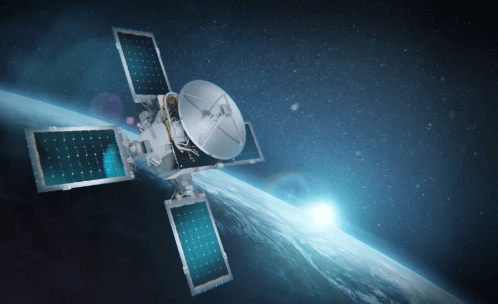

Space communication is evolving through faster links and flexible networks. Optical channels promise higher bandwidth and lower latency, while radio remains reliable for deep-space reliability. Quantum keys and AI-driven management aim to bolster security and optimize routing under long delays. Standards and governance shape interoperable, resilient architectures across jurisdictions. The path forward combines new formats, predictive scheduling, and global coordination, but underlying trade-offs and real-world constraints signal that further scrutiny is essential.
How Space Communication Is Evolving Today
Space communication is undergoing rapid transformation driven by higher data rates, advanced modulation, and new orbital architectures. The evolution centers on satellite relays optimizing network topology, reducing contention, and enabling flexible routing. Operations confront deep space latency challenges, prompting innovative protocols and predictive scheduling. Enhanced interoperability across constellations supports resilient links, autonomous management, and scalable services for diverse users seeking freedom and rapid information access.
From Radio to Optical: Transforming Data Rates and Latency
Optical communication is redefining space data transfer by replacing traditional radio links with photon-based channels, yielding substantial gains in bandwidth and latency performance.
The shift emphasizes optical modulation techniques that maximize signal integrity over long distances, enabling higher data rates.
Deep space protocols adapt to intermittent connectivity and link budgets, balancing error correction with power efficiency while maintaining robust, transparent interplanetary communications.
Quantum Keys and AI: Securing and Optimizing Space Links
Quantum keys and AI techniques are shaping the security and optimization of space links by leveraging quantum-resistant cryptography and machine learning-driven link management. The approach integrates quantum keys for secure key exchange and ai security measures that monitor anomalies in real time.
ai optimization analyzes traffic patterns, reduces latency, and enhances throughput while preserving resilience against evolving threats in deep-space networks. quantum keys.
Building the Future Network: Formats, Standards, and Global Impact
The future space network hinges on standardized formats and interoperable frameworks that enable seamless operation across diverse architectures and jurisdictions. Building the future requires common protocols, open interfaces, and rigorous conformance tests to reduce fragmentation. Global policy alignment and transparent governance shape deployment. Deep space networking demands scalable architectures, robust delay-tolerant networking, and shared security models for sustainable, borderless exploration and commerce.
See also: Innovations in Space Travel
Frequently Asked Questions
What Are the Ethical Implications of Space-Based Communication Dominance?
The ethical implications include potential inequities in access and influence, challenging ethical equity, and questions of governance legitimacy as dominant actors set rules; thus, space-based communication dominance necessitates inclusive governance, transparent processes, and accountability mechanisms for equitable participation.
How Will Lunar and Martian Latency Affect Human Missions?
Latency will constrain autonomous crew operations; lunar and Martian missions demand robust latency mitigation and adaptive network topology to sustain timely decision cycles, fault tolerance, and autonomy, aligning with an audience valuing freedom and resilient exploration.
Can Consumer-Grade Devices Access Deep-Space Networks Securely?
Consumer grade devices may securely access deep space networks only under strict encryption standards and controlled access. The analysis emphasizes rigorous security postures, authenticated channels, and mission-specific allowances to preserve data integrity while preserving user freedom and operational integrity.
What Is the Environmental Impact of Space Communication Infrastructure?
The environmental impact of space communication infrastructure centers on its environmental footprint and orbital debris; analysis shows significant considerations from launches, manufacturing, and end-of-life disposal, requiring sustainable design, debris mitigation, and accountability to preserve open access and freedom in space.
How Will Space Internet Affect Global Digital Inclusion Currently?
The question examines how space internet affects global digital inclusion: it could improve global connectivity, yet cost barriers persist. A detached analyst notes potential for broader access, while pricing, governance, and infrastructure choices shape equitable outcomes for users.
Conclusion
Space communication is advancing from traditional radio to high-bandwidth optical links, enabling orders-of-magnitude reductions in latency and substantial gains in data rates for deep-space missions. An illustrative stat: optical links can deliver terabits per second under favorable geometry, dwarfing radio capabilities and reshaping mission timelines. Quantum keys and AI-driven routing further enhance security and efficiency, while standardized formats and global governance reduce fragmentation. Collectively, these developments enable resilient, end-to-end interplanetary networks with scalable, interoperable architectures.
